Project
Holy Rus
An image of human life together in which the source of authority is God and responsibility is shared.
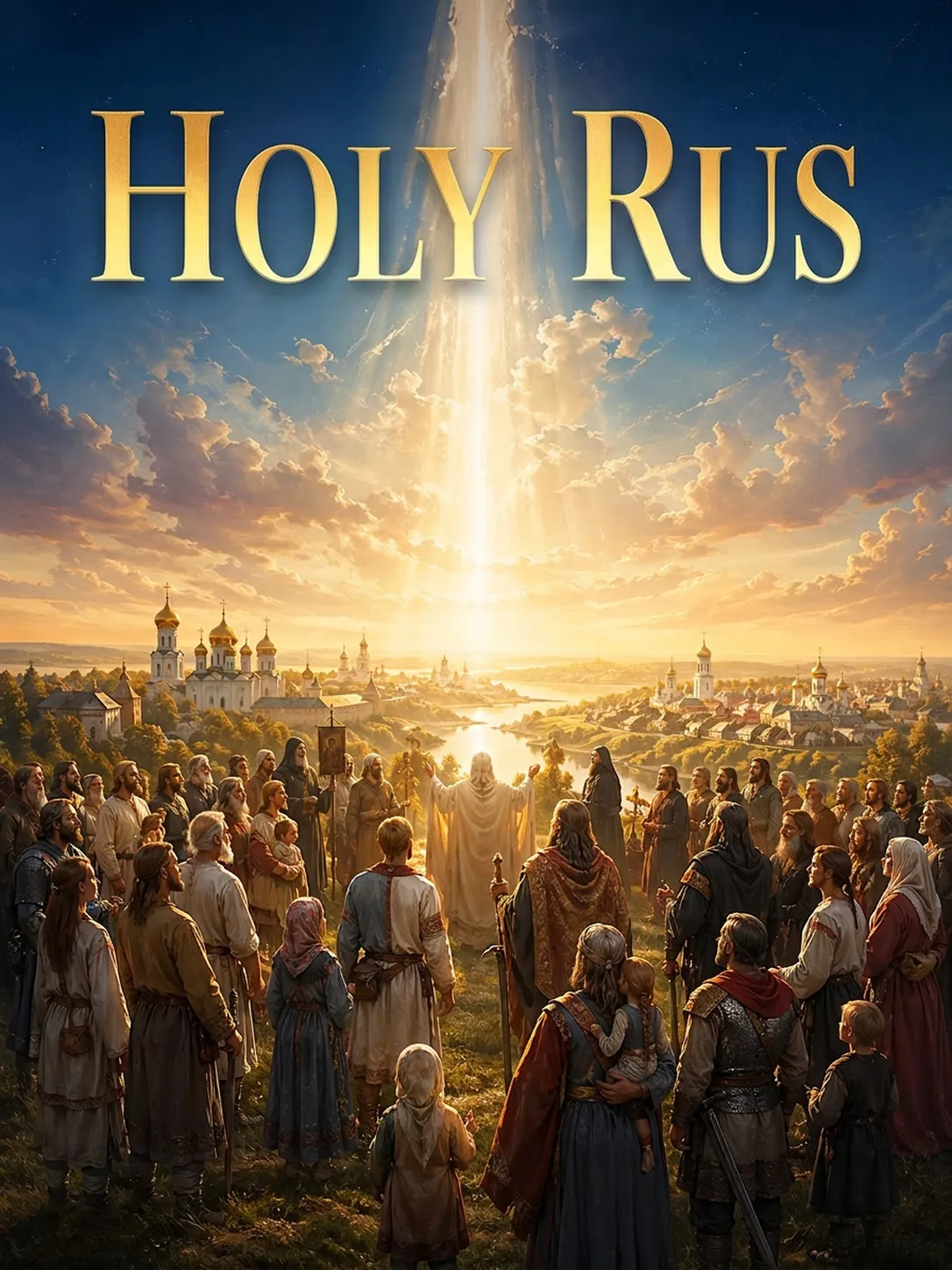
An image of a future life together
Holy Rus is an image of a future way of living together, in which the highest foundation of life is acknowledged to be God — not fear, profit, force, or the formal will of the majority.
But this is not a theocracy in the familiar historical sense, where religious authority claims for itself the right to speak in God’s name. And it is not democracy in its present form, where the people hand their strength to representatives once every few years and then remain shut out of any real share in their common life.
Holy Rus is theocracy and democracy at once: God is the highest source of truth, conscience, and measure, while people together bear responsibility for the order of their lives before Him and before one another.
Authority as shared service
In such a society, authority is not delegated away once and for all, not seized by rulers, and not turned into a separate layer above the people. Authority belongs to the whole body of people as a living council, where each person is neither a subject nor a voter, but a participant in a shared service.
Decisions are reached not out of a struggle of interests, parties, and clans, but out of a striving to discern what accords with light, truth, love, justice, and life.
Conscience above the law
The basis of such an order is not coercion, punishment, and fear of the law, but the inner conscience of the person, a purified shared will, and responsibility before God.
In Holy Rus, the law must not be a weapon of power against the person; it must be a form of protection for life, dignity, and truth.
The state is understood here not as a machine of administration, but as a shared form of service, where authority exists only for the sake of the person, the people, and the fulfillment of a higher meaning.
Not a utopia, but a principle
Holy Rus is not a return to the past, not a national dream, and not a religious utopia, but an attempt to see a different principle for the ordering of the world.
It is a space where the human being ceases to be an object of administration and becomes a bearer of light, conscience, and responsibility.
That is why the Holy Rus section is devoted not to politics in the usual sense, but to a search for a new foundation for authority, law, and life — a foundation in which the chief ruler is not a human being but God, revealed through light, truth, and love.
Doors inward
Sections of differing weight — from essay to practice. Enter where it calls.
Core Principles of the Reform
Holy Rus as a self-sufficient spiritual organism free of external dependence — the core principles of economic reform, foreign relations, and spiritual purpose. Not accumulation, but flourishing through proportion, honesty, and co-creation; not a geography, but a living spiritual organism.
essayThe Economy of Light
An economy of fellowship in place of capitalism — where money is not the goal but an instrument of service, profit is shared fairly, and corruption disappears not from punishment but from transparency. A full audit of public finances, the abolition of VAT, a guaranteed income, and the five-year plans of an economy of Light.
essayThe Constitution of Holy Rus
The Constitution of Holy Rus as a spiritual foundation rather than a legal document — a council-governed commonwealth where authority is borne not by the state but by the people in unity, where authority is service, and where the law accords with the Higher Law of the Creator. Self-government by the people and fellowship in place of a hollowed-out democracy.
revelationPancratius's Dream of the Gift System
Pancratius’s dream — a field of gifts, a valley of berries, and a monk asking about gratitude — interpreted by the Creator as a revelation about the future of Holy Rus. Not accumulation, but passing it onward: all that is given to you is given to others through you.
revelationA Revelation of Tartaria
The Word of the Creator through Svetozar about Tartaria — not as a legend or a state, but as the Memory of Unity. A great land of the open spaces of the spirit, a union of peoples without bondage, erased from memory, which will not return from without but rise from within — through you.
Frequently asked
Is this a political project?
No. It is not a party, a movement, or a platform. It is an image — an attempt to see a different principle of order, in which politics ceases to be a struggle of interests and becomes a shared discernment.
Is this a return to the past — empire, monarchy, a church-state?
No. It is neither a restoration nor a national dream. Holy Rus looks not backward but inward — to where authority, law, and conscience find a different foundation.
How is it different from a theocracy?
In that no one claims for themselves the right to speak in God's name. God is revealed to each person through light, truth, and love — not through a go-between who declares himself the only channel.
And from democracy?
In that authority is neither delegated away nor dissolved into the majority. Each person is a participant, not a voter once every few years.